Bedding · Nursery care
Building a More Hygienic Nursery Sleep Setup
A nursery sleep space is used night after night, through quiet stretches and the inevitable spills, leaks, and laundry. A simple system of well-fitting, washable bedding can make everyday care easier—while keeping the sleep surface aligned with the manufacturer’s instructions and current safe-sleep guidance.
Published October 31, 2026
In a nursery, hygiene is rarely a dramatic undertaking. It is built from small, repeated tasks: changing a sheet, checking a mattress cover, washing a soiled layer, and returning the sleep space to a clean, orderly state. The best setup makes those routines manageable without adding unnecessary objects to the crib.
Bedding has two jobs that must remain in balance. It should feel comfortable and be straightforward to care for, but it must also be appropriate for the infant sleep surface. Softness, absorbency, and easy laundering matter; so do a secure fit and respect for the crib and mattress maker’s directions. A practical nursery begins not with a pile of accessories, but with a clear understanding of what belongs on the sleep surface—and what does not.
Start with the sleep surface
Before choosing sheets or protective layers, identify the exact mattress or sleep surface in use. Crib mattresses are made to fit particular crib dimensions, and the mattress manufacturer’s instructions explain which coverings are suitable. A cover or pad that seems close in size may still bunch, shift, or interfere with a secure sheet fit. Check dimensions and compatibility rather than assuming that products labeled for a crib are interchangeable.
For infant sleep, keep the sleep space clear and follow current guidance from a qualified health professional and public-health authorities. In general, the crib should have a firm, flat sleep surface with a tightly fitted sheet. Avoid adding pillows, loose blankets, stuffed toys, positioners, or other soft objects to an infant’s sleep space. A decorative layer or extra cushion may look inviting, but it is not a substitute for safe-sleep recommendations.
The distinction between a mattress protector and an extra comfort layer is important. A protector is intended to shield the sleep surface from moisture; it should be designed for the mattress and installed exactly as directed. It should not create a loose, padded, or uneven surface. If instructions conflict or a product’s use is unclear, ask the manufacturer or a pediatric clinician rather than improvising.
Choose a fitted sheet that stays put
A fitted crib sheet should match the sleep surface and sit snugly, with its elastic fully secured around the mattress. The sheet should not pull loose at the corners or form folds across the sleeping area. Before use, check the fit around the entire perimeter. After laundering, repeat the check: fabric can shrink, stretch, or change shape depending on its construction and care.
Organic cotton crib sheets are one option for caregivers who value natural-fiber bedding and a soft hand against the skin. Cotton is familiar, breathable, and easy to wash when the care label permits machine laundering. “Organic,” however, does not replace the practical questions: Does the sheet fit the particular mattress? Can it be cleaned according to the household’s routine? Does it remain smooth and secure after repeated washing?
The Naturepedic Organic Sateen Crib Sheet is described as made from GOTS-certified organic cotton, with a fitted design and elastic around the perimeter. Its product information lists approximate dimensions for standard and oval sheet versions, so caregivers should confirm that the version they select matches their own sleep surface. The listed care instructions say it is machine washable and dryer-friendly; as with any bedding, follow the product label and inspect its fit after laundering.
A sheet’s weave can affect how it feels, but thread count alone does not determine suitability. Construction, fit, seam quality, and care requirements all matter. In a nursery, the most useful sheet is often the one that is comfortable, correctly sized, and simple to clean—not necessarily the one with the most elaborate finish.
Use moisture protection thoughtfully
Spills and accidents are part of everyday caregiving. A moisture-resistant layer beneath the fitted sheet can help protect a mattress, provided the layer is specifically designed for the sleep surface and allowed by its manufacturer. The aim is a practical barrier under the sheet, not a stack of pads or coverings that changes the firmness, fit, or shape of the surface.
A flat waterproof mattress pad may appeal to caregivers looking for a low-profile protective layer. Naturepedic describes its Waterproof Organic Cotton Crib Mattress Pad as having cotton flannel on top, cotton muslin underneath, and a thin waterproof inner layer. The product information says it is designed to be layered under a crib sheet. Before using any pad, verify that its dimensions and construction are compatible with the specific mattress and crib, and follow the instructions supplied with both products.
Waterproofing and breathability are not identical properties. A moisture barrier is intended to slow or stop liquid from passing through, while the outer fabric contributes to the feel of the surface. Product descriptions may use terms such as breathable, moisture-wicking, or temperature-regulating, but those terms do not establish that a product is appropriate for every infant sleep setup. Check the product specifications and the sleep-surface maker’s guidance, and do not infer safety from a material claim alone.
Avoid folding a pad, tucking excess material beneath the mattress, or using multiple protective layers unless the manufacturers explicitly permit that arrangement. A protector should lie flat and remain covered by the fitted sheet. If it shifts, wrinkles, or changes the mattress fit, stop using it until the issue is resolved. A clean setup is only useful when it also remains properly assembled.
Make laundry part of the system
A nursery is easier to maintain when cleaning is planned rather than improvised. Keep a spare fitted sheet and, if appropriate for the sleep surface, a spare compatible protector available so a soiled layer can be removed without delay. Store clean bedding in a dry, accessible place, separate from used items. A small, consistent routine can prevent a late-night change from turning into a search through drawers.
Read care labels before the first wash. Water temperature, detergent, drying method, and restrictions on bleach or fabric softener vary by product. Following those directions helps preserve elastic, seams, and protective layers. A waterproof membrane may require gentler treatment than the cotton fabric surrounding it; high heat or unsuitable cleaning products could shorten its useful life. When the label gives specific instructions, use them rather than relying on assumptions about what “cotton” or “waterproof” means.
After washing, check each item before returning it to the crib. Look for stretched elastic, torn seams, loose threads, damaged coatings, or persistent odors. A sheet that no longer fits securely should be replaced. A pad with a compromised barrier may no longer protect the mattress as intended. Laundering is not simply a reset button: inspection helps catch wear that accumulates gradually through repeated use.
Respond to spills without overcomplicating the crib
When bedding becomes wet or soiled, remove the affected items and clean them according to their labels. If moisture reaches the mattress, follow the mattress maker’s cleaning and drying instructions. Let surfaces dry fully before replacing approved layers. This can help prevent lingering dampness and odor, while avoiding cleaning methods that might damage the mattress materials.
It can be tempting to prepare for every possible accident by layering several sheets and pads. Yet extra layers can create fit problems and are not a reason to disregard manufacturer guidance. A more dependable approach is a correctly fitted sheet, at most a compatible protective layer if permitted, and clean spares within reach. Keep the infant’s sleep space uncluttered, and do not leave spare bedding, towels, or other loose items in the crib.
For families dealing with frequent leaks, skin concerns, or a specific medical need, ask a pediatric clinician for individualized advice. General bedding choices cannot diagnose or treat a health problem. A clinician can help determine whether a change is needed and whether a particular product or arrangement is appropriate for the child.
Keep comfort and safety in perspective
Comfort in an infant’s sleep environment does not mean adding softness. It is better understood through a clean, dry, appropriately fitted surface, a comfortable room, and clothing suited to the conditions. Avoid using bedding to compensate for a room that is too warm or cold. Follow health guidance about infant clothing and room temperature, and check with a clinician if you have questions about an individual child.
Material labels can help shoppers compare products, but they should be read precisely. Organic certification describes defined production standards; it does not guarantee that a sheet fits a particular crib or that a pad is compatible with a particular mattress. Hypoallergenic claims also vary in meaning and do not ensure that a product will prevent every reaction. Caregivers can use certifications and material details as part of a decision, alongside fit, cleaning instructions, durability, and the manufacturer’s recommendations.
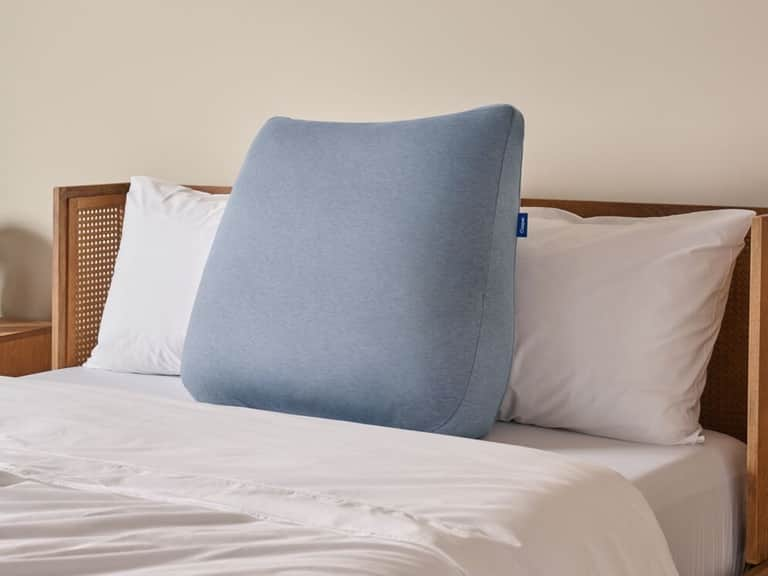
The same restraint applies to accessories. A supportive pillow or backrest may be useful for an adult sitting beside a crib, but pillows and positioners do not belong in an infant’s sleep space unless a qualified clinician has given specific direction. Keep adult comfort items separate from the crib. This simple boundary helps preserve the clear sleep environment recommended for infants.
A simple checklist for nursery bedding
- Confirm that the mattress or sleep surface is approved for the crib and fits according to the manufacturer’s instructions.
- Choose a fitted sheet sized for that exact sleep surface, and check that it remains snug after laundering.
- Use a waterproof mattress pad only if it is compatible with the mattress and permitted by the product instructions.
- Keep the infant sleep space clear of pillows, loose blankets, toys, positioners, and other soft objects.
- Follow care labels for washing and drying, especially when a product includes a waterproof layer or elastic components.
- Inspect sheets and pads regularly for damage, stretched corners, loose seams, or changes in fit.
- Keep clean spare bedding accessible, but store it outside the crib until needed.
- Ask a pediatric clinician or manufacturer when guidance is unclear or a child has a specific health need.
A calmer routine, one layer at a time
A hygienic nursery sleep setup does not require a complicated collection of products. It depends on a few well-chosen layers, each with a clear purpose: a compatible mattress, a secure fitted sheet, and—if approved for that sleep surface—a protective pad underneath. Washability can make recurring care more manageable, while careful attention to fit helps keep the arrangement orderly.
Organic cotton sheets and moisture-resistant layers may offer practical features that suit a household’s preferences, but no label replaces the basics. Check the dimensions. Read the care instructions. Follow the mattress and crib maker’s guidance. Keep the infant’s sleep surface clear and use current safe-sleep recommendations as the foundation for every decision.
In the quiet rhythm of nursery life, hygiene is less a single achievement than a repeated practice. A clean sheet, a dry surface, and a carefully fitted layer can make the next change simpler. Built around safety and maintained with ordinary care, that routine gives caregivers a practical way to keep the sleep space ready for the night ahead.
Frequently asked questions
Are organic cotton crib sheets machine washable?
Many are, but care instructions depend on the individual product. Check the label before washing and follow its recommended temperature and drying method. After laundering, confirm that the sheet still fits the mattress securely.
Can I use a waterproof mattress pad under a crib sheet?
Only if the pad is designed for that sleep surface and its instructions, along with the mattress maker’s guidance, permit it. It should lie flat beneath a snug fitted sheet. Do not use a pad that bunches, shifts, or changes the mattress fit.
How many layers should an infant crib have?
Follow current safe-sleep guidance and the manufacturers’ directions. In general, an infant sleep space should remain clear, with a firm, flat sleep surface and a tightly fitted sheet. Avoid adding loose bedding and accessories.
When should nursery bedding be replaced?
Replace bedding when it no longer fits securely or shows damage such as torn seams, weakened elastic, or a compromised moisture barrier. Follow the product’s care and service guidance, and inspect items regularly rather than waiting for visible failure during use.
This article provides general educational information, not medical advice. Always follow current safe-sleep recommendations and the instructions supplied by the crib, mattress, and bedding manufacturers. Consult a qualified health professional about questions specific to an infant’s care.