Pillows & bedside comfort
How to Choose a Support Pillow for Bedside Sitting
A pillow can turn a bed from a place to lie down into a place to read, rest, talk, or take part in everyday care. The right support depends on the person, the mattress, and the task—not simply on how large or plush the pillow looks.
Begin with the reason for sitting up
Before comparing shapes or fabrics, picture the moment when the pillow will be used. Someone sitting upright for a few pages before sleep has different needs from a person who spends longer stretches in bed, or a caregiver helping with a routine at home. A pillow that feels comfortable for a short rest may shift or feel inadequate during extended sitting. Starting with the intended use makes the selection more practical.
Consider how often the pillow will be used, how long each session usually lasts, and what the person will be doing. Reading, using a tablet, having a conversation, or eating a light meal may call for steady support behind the torso. Some people want gentle cushioning against the lower back; others prefer a broader surface that supports the shoulders as well. If the pillow is mainly for occasional use, portability and easy storage might matter. If it stays on the bed throughout the day, cover care and a stable shape may be more important.
Also take account of the bed itself. A soft mattress may allow the hips to sink, changing the angle of the body. A firm mattress may make the same pillow feel more upright. A headboard, wall, or bed rail can affect where the pillow sits, while a narrow bed may leave less room to arrange a large support. The aim is not to find a universal “correct” position but to create a comfortable, stable setup that suits the user and the setting.
Match the shape to the kind of support you want
Support pillows come in many forms, from ordinary bed pillows arranged in layers to wedges and structured backrest designs. Their shapes influence where the support meets the body. A standard pillow can be familiar and easy to reposition, but it may compress, slide, or need frequent adjustment when used to support the torso. A wedge has an angled profile that can elevate part of the upper body, though the incline may not suit every person or every activity.
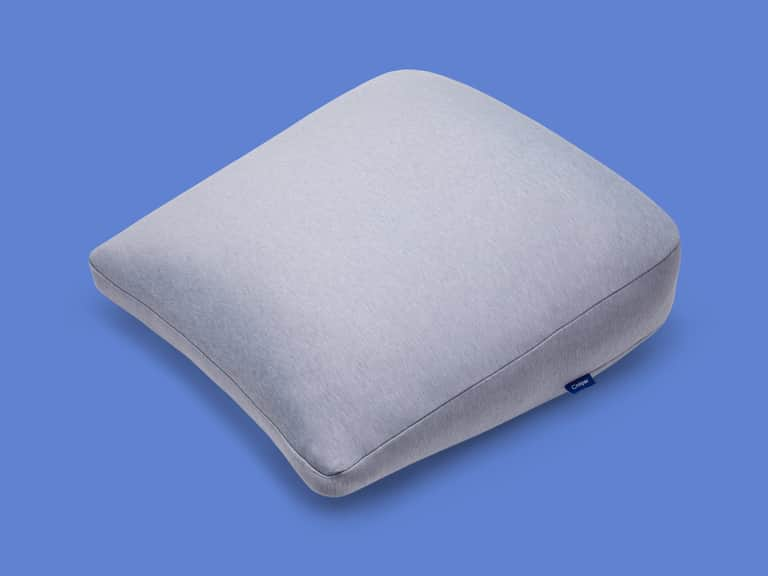
A backrest pillow is designed to provide a more upright place to lean. Many have a broad back panel and raised sides that help cradle the upper body. A teardrop-shaped design takes a different approach: its tapered form can provide a broad area behind the back and additional thickness near the lower portion. That contour may work well for some users, but comfort depends on body size, preferred sitting angle, mattress firmness, and how the pillow meets the lower back. Shape descriptions can offer clues, not guarantees.
Look for support that feels distributed rather than concentrated in one uncomfortable spot. When sitting, the torso should feel held without the shoulders being pushed forward or the lower back forced into an awkward arch. A pillow that is too small may leave the upper back unsupported; one that is too bulky may crowd the space or change the sitting angle more than intended. If possible, try the pillow in the room and on the bed where it will be used, since a showroom chair or a different mattress cannot fully reproduce that experience.
For a straightforward example of this category, the Backrest Pillow is described as a teardrop-shaped support with extra lumbar cushioning. Its listed dimensions are 24 inches tall and across, and 12 inches at its thickest point. These measurements can help shoppers judge whether it is likely to fit their bed and body, but they do not establish that it will suit everyone. The useful test is whether its shape provides comfortable, steady support for the intended activity.
Size is about fit, not just fullness
A large pillow may look inviting, but size should be considered in relation to both the person and the bed. Check the pillow’s height, width, and depth, then think about where those dimensions will sit when the pillow is placed against a headboard or wall. A support that spans much of a narrow bed can reduce the space available for movement. A compact pillow may be easier to handle but may not support enough of the back for someone who wants to sit for longer periods.
Body proportions matter, too. Someone with a shorter torso may find that a tall backrest reaches higher than needed, while a taller person may want support that extends farther up the back. Shoulder width, hip position, and preferred distance from the headboard all influence the fit. These are practical considerations rather than measurements that can be reduced to a single formula. If the product details provide dimensions, compare them with the space available and consider whether the pillow can be returned if the fit is unsuitable.
Think about how the pillow will be moved and stored. A bulky design can be reassuring when in use but awkward to lift, reposition, or tuck away. If a caregiver will regularly arrange the bed, a manageable weight and an easy-to-grip shape may make daily routines simpler. If the pillow will remain in one place, its footprint may matter more than portability. Room to reach bedside controls, personal items, or mobility aids should also remain clear.
Firmness should feel steady, not rigid
Firmness affects whether a support pillow holds its shape and how it feels against the body. A very soft pillow may compress quickly, leaving the user to lean against the mattress or a hard surface. A firmer pillow may provide a more stable backrest, but excessive firmness can feel uncomfortable or create pressure in a particular area. The best balance is personal: enough resistance to support the posture, with enough cushioning to feel comfortable.
Product descriptions do not always use firmness terms in the same way. When details are limited, look for clues such as the pillow’s construction, dimensions, and intended use. If a pillow is described as supportive or ergonomic, treat those words as a starting point rather than proof that it will suit a specific body. A practical trial, where available, is more informative than a claim alone.
After arranging the pillow, notice whether the user can settle without repeatedly pushing it back into place. Check whether the shoulders feel relaxed and whether the lower back has comfortable contact with the support. Small adjustments in position may make a noticeable difference. If the pillow consistently slips, collapses, or makes sitting more difficult, it may not be the right shape or firmness for that bed and user.
Consider cover care and everyday hygiene
A bedside pillow is handled often and can collect ordinary household dust, skin oils, crumbs, and spills. In a care setting, frequent contact makes cleaning instructions especially relevant. A removable cover that can be machine washed may simplify routine laundering, provided the care label permits that method. Check whether the cover can be removed without difficulty and whether it needs a particular water temperature, drying method, or gentle cycle.
Care instructions for a cover do not necessarily apply to the pillow’s inner material. Avoid assuming the whole pillow can be washed or dried in the same way. Follow the manufacturer’s guidance, and make sure a washed cover is fully dry before putting it back on. For a shared or higher-care environment, ask the relevant facility or care team what cleaning products and procedures are appropriate. A household fabric cover is not automatically suitable for clinical disinfection.
Pay attention to seams, closures, and the way the cover fits. A cover that bunches beneath the back may become distracting, while a loose fit can allow the pillow to shift inside it. The listed Backrest Pillow, for example, has a removable knit cover described as machine washable. That feature may make ordinary home care more convenient, but users should still check the product’s current care label for specific instructions.
Make the bed a comfortable, uncluttered place
Once a pillow is chosen, placement is part of the experience. Set it against a stable surface where it will not slide into a gap or obstruct access to items the person needs. Arrange the pillow before the user settles, then check that the body is supported and that the legs and arms can rest comfortably. Keep pathways and bedside equipment unobstructed. In a care routine, an uncluttered area can make it easier for both the person in bed and the caregiver to move safely.
A support pillow is not a substitute for every other positioning aid. It may help someone sit more comfortably for reading or resting, but it should not be assumed to provide pressure-injury prevention, clinical positioning, or fall protection. Those needs can depend on mobility, sensation, skin condition, diagnosis, and the person’s care plan. If the person has difficulty maintaining a position, has fragile skin, or needs help transferring, a clinician or qualified care professional can advise on appropriate support.
Be especially attentive when the pillow changes how easily someone can get out of bed or reach a call button, mobility aid, or personal item. A comfortable position should not make essential actions harder. If bed rails or adjustable bed mechanisms are involved, follow the equipment manufacturer’s instructions and the guidance of the care team. Do not wedge a pillow into moving parts or use it in a way that interferes with the bed’s operation.
Questions to ask before choosing
A few focused questions can bring the decision into sharper view. They are useful whether selecting a pillow for personal use, helping a family member, or preparing a bedroom for a period of home care:
- Will it be used for brief reading sessions, longer periods of sitting, or a specific daily routine?
- Does the user prefer gentle cushioning, a more upright backrest, or extra support near the lower back?
- Will the pillow fit the bed without crowding the user or blocking access to nearby essentials?
- Are the dimensions and cover-care instructions clearly stated?
- Can the pillow be repositioned and stored easily by the person who will handle it?
- Does the intended use involve a medical or mobility concern that should be discussed with a healthcare professional?
These questions shift attention away from an abstract idea of the “best” support pillow and toward a better match. A pillow that is excellent for one person’s reading routine may be too small, too firm, or too awkward for another person. The details of daily use are often more revealing than a product label.
Try it in the setting where it will be used
When possible, test the pillow at the bedside. Place it as it would normally be used and sit back for several minutes. Check whether it stays in position, whether the user can adjust it independently, and whether it supports the intended posture without crowding the shoulders or hips. A brief trial will not predict every long-term comfort issue, but it can reveal obvious mismatches in size and angle.
Consider the full routine rather than a single still moment. Can the user reach a book, glasses, phone, or water without twisting awkwardly? Is there room for a caregiver to assist if needed? Does the pillow need to be moved before the bed can be adjusted or before the person transfers? Practical details such as these often determine whether a support pillow becomes part of everyday life or is left unused at the side of the bed.
If a return period is available, keep packaging and review the conditions before trying the pillow. Some items have hygiene-related restrictions. A clear understanding of these policies helps avoid surprises and gives the user a fair opportunity to assess fit.
Comfort has limits—and that is useful to know
Support pillows are comfort aids, not medical treatments. Persistent pain, new or worsening discomfort, breathing concerns, difficulty swallowing, dizziness, or changes in mobility deserve professional attention rather than an improvised adjustment alone. A clinician can assess whether a particular sitting position is appropriate and whether other supports or equipment are needed.
Even without a specific medical concern, comfort can change over time. A pillow that once felt right may lose its shape or no longer suit the user’s routine. Check periodically for compressed filling, damaged seams, a stretched cover, or persistent slipping. Replace or reassess the pillow if it no longer provides stable support or cannot be cleaned according to the needs of the household.
In a shared-care environment, ask how personal pillows should be stored and cleaned. Follow the facility’s infection-prevention practices rather than assuming household laundering rules apply. In the home, regular cover washing and a clean, dry place for storage can help keep the pillow ready for use, while product-specific instructions remain the guide for care.
A small support can change the rhythm of a day
The value of a bedside support pillow is often found in ordinary moments: finishing a chapter, speaking with a visitor, or sitting comfortably while a caregiver helps with a routine. Choosing well means looking beyond softness or appearance. Start with the activity, compare shape and dimensions, consider firmness and cover care, and test the pillow in the place where it will live.
A teardrop-shaped backrest may suit someone looking for a broad back support with extra cushioning near the lower back; another person may prefer a wedge or a familiar arrangement of standard pillows. Neither shape is right for everyone. The most useful choice is one that fits the person, the bed, and the real demands of daily use—and that leaves room for professional guidance whenever health or safety concerns arise.